Plate: cm (30.5 × 21.6) in (12.01 × 8.5) · Paper: cm (30.5 × 24.1) in (12.01 × 9.49)
Technique
Copper engraving
Note
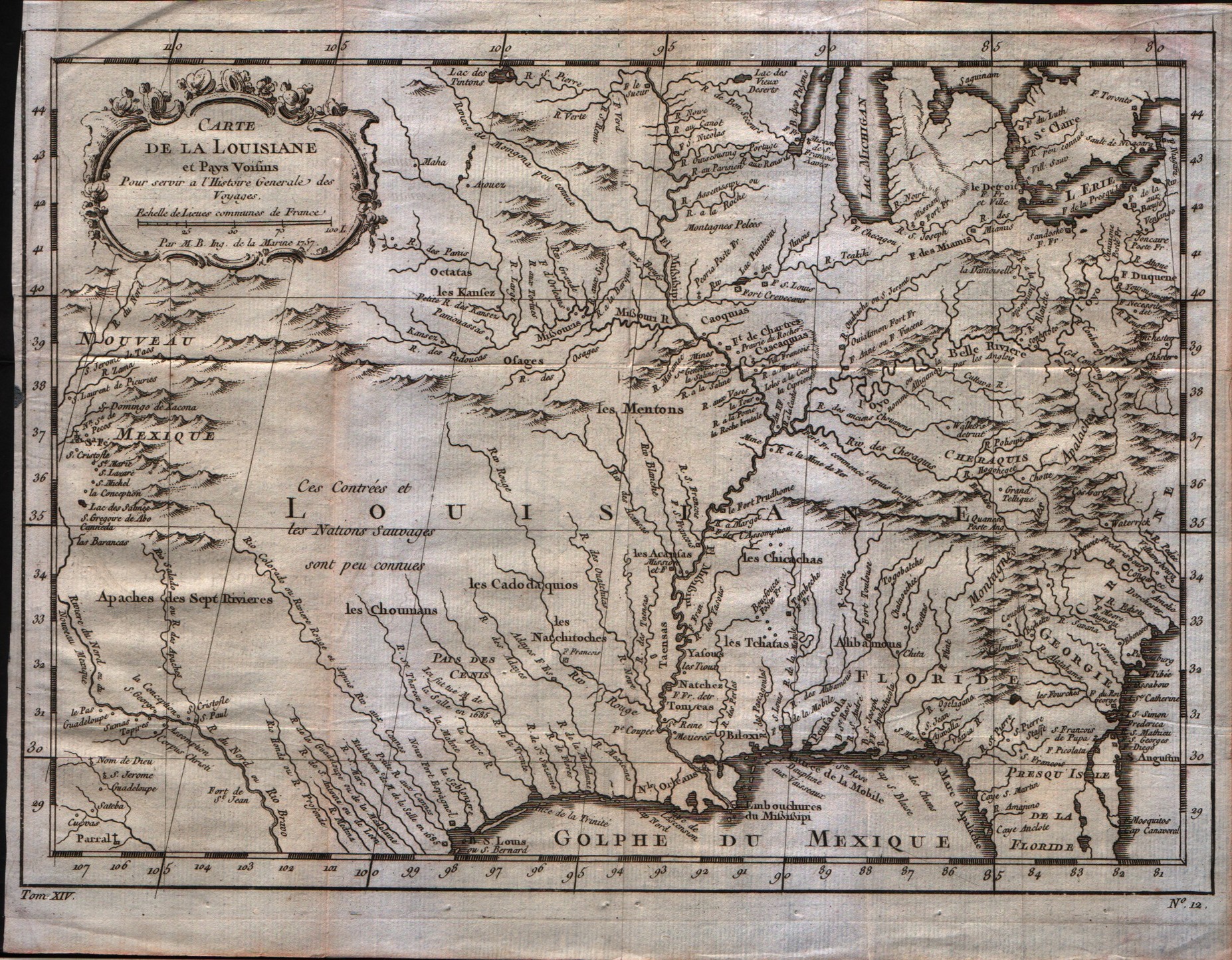
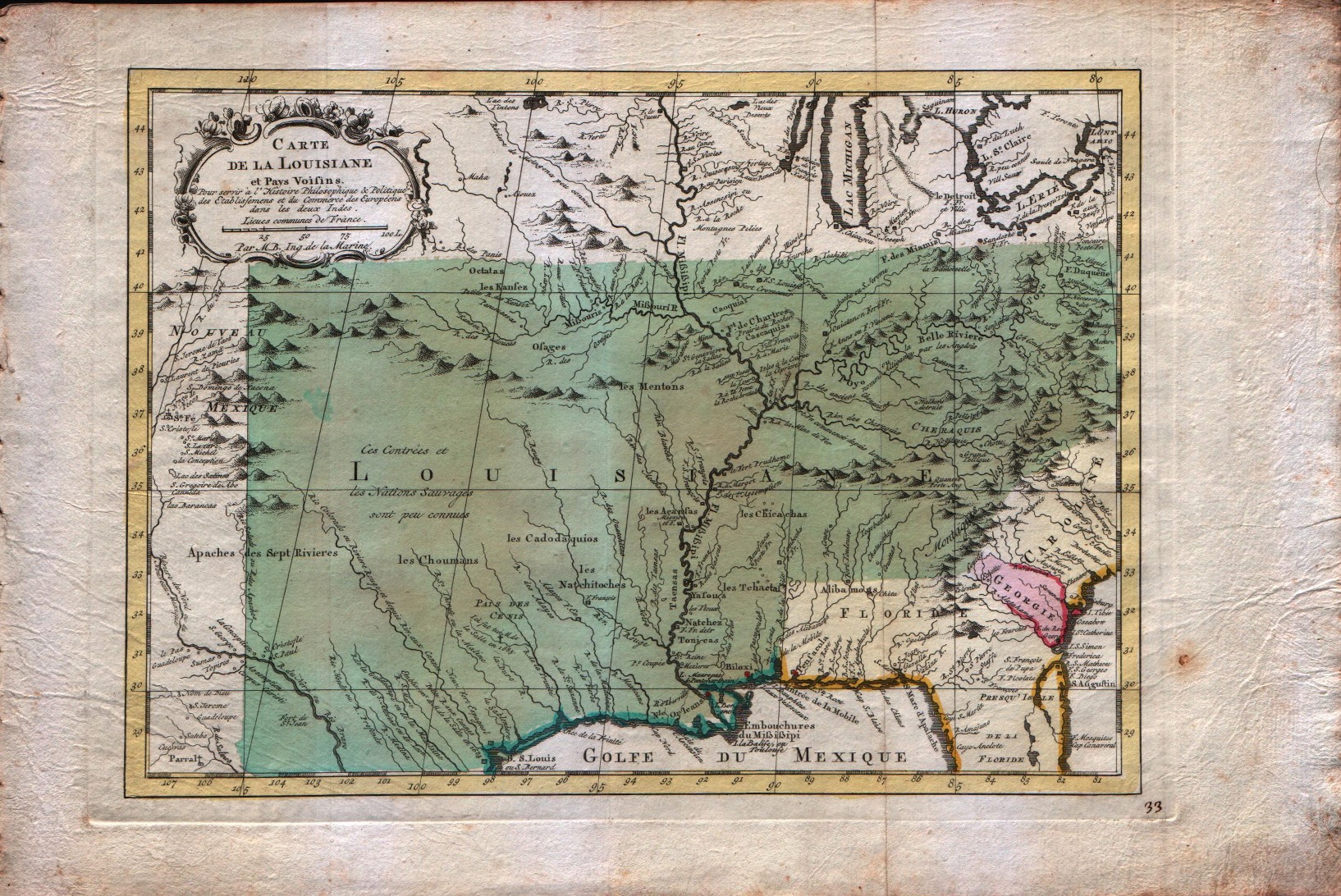
Bellin notes all major river systems, especially the Mississippi system upon which their claims rested, and many of the French forts, including Detroit, Fort Duquesne (Pittsburgh), Fort de la Presque Isle (Erie), Sandoske, and Fort Checagou.
Plate: cm (29 × 20) in (11.42 × 7.87) · Paper: cm (37 × 25) in (14.57 × 9.84)
Technique
Copper engraving
Note
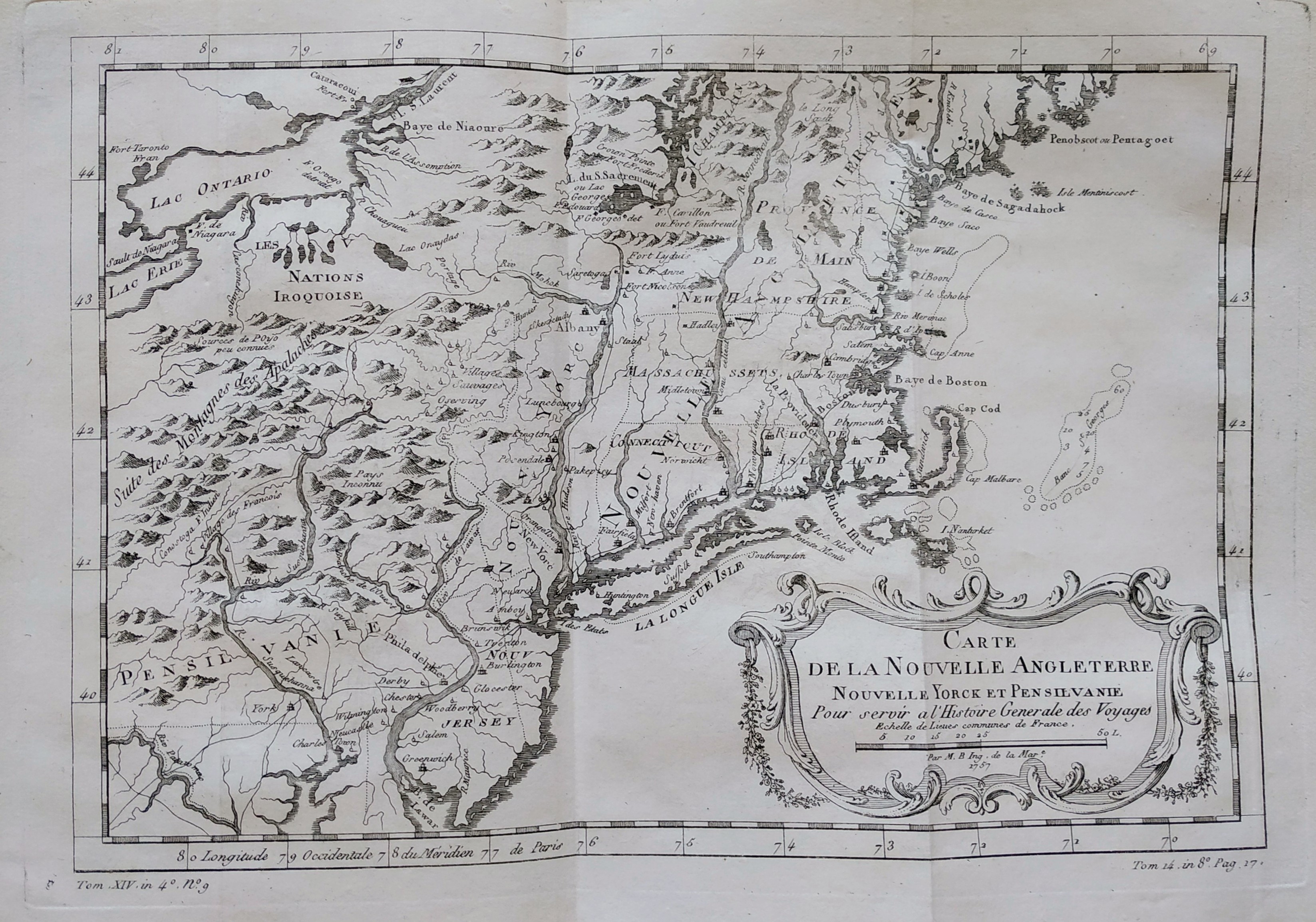
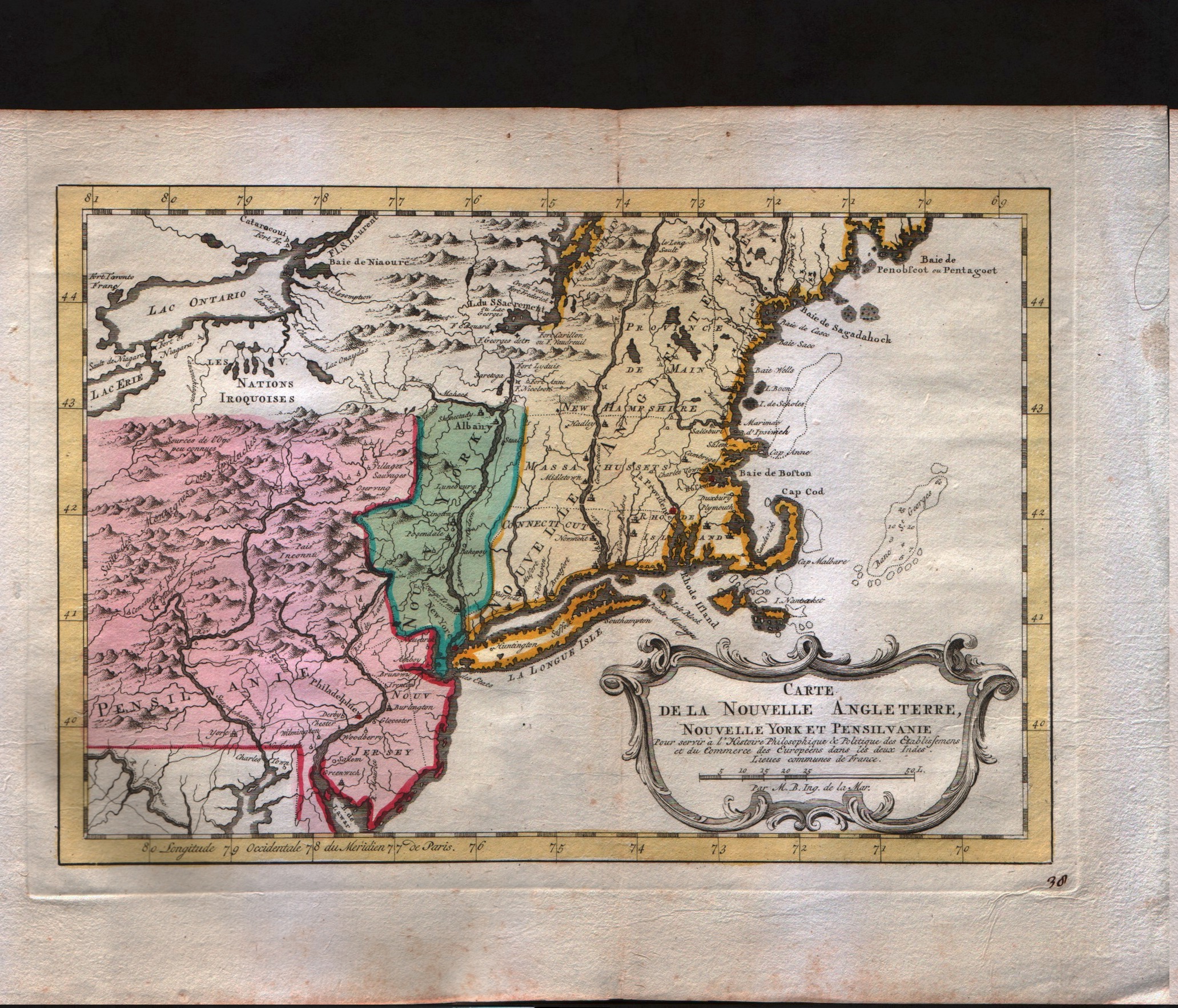
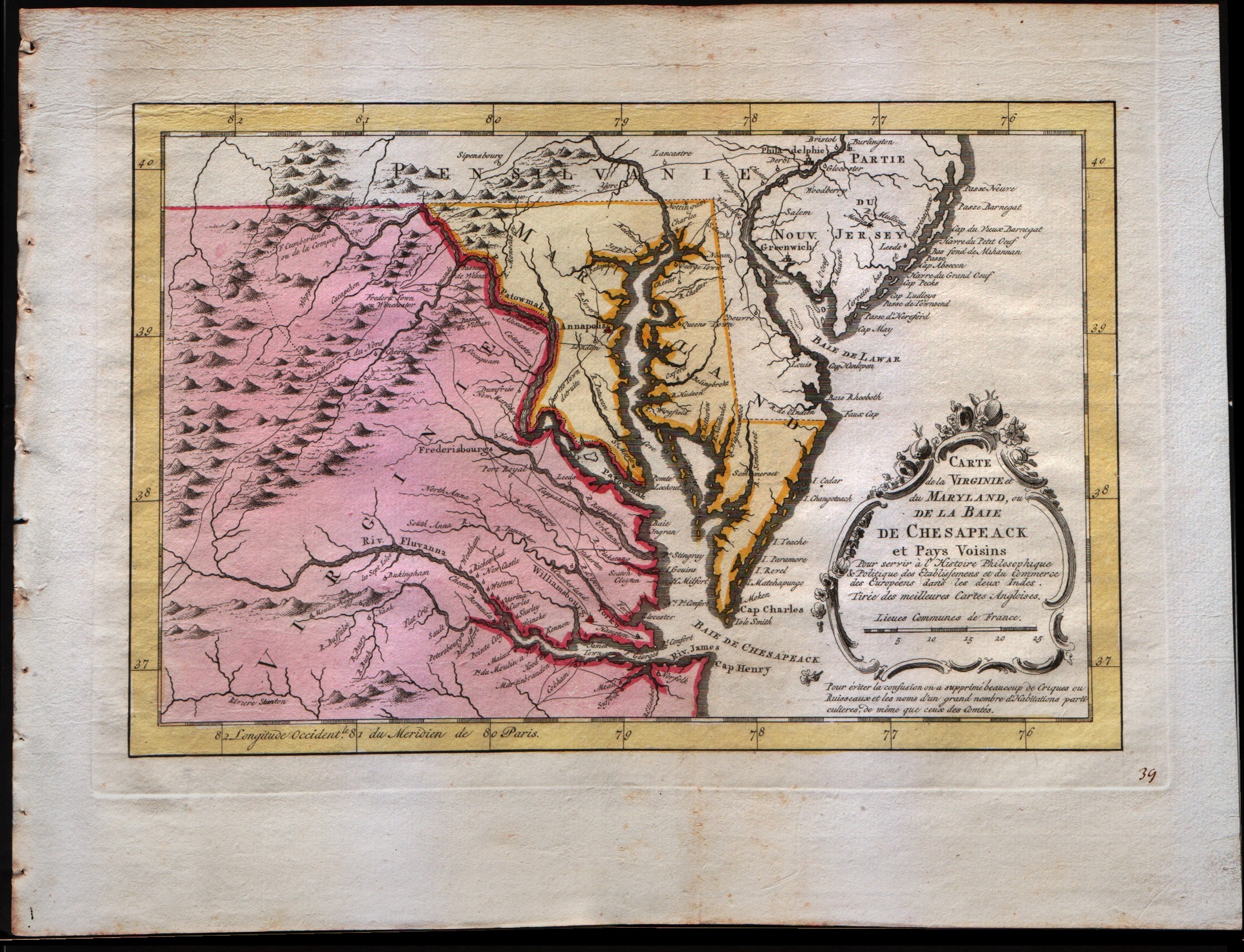
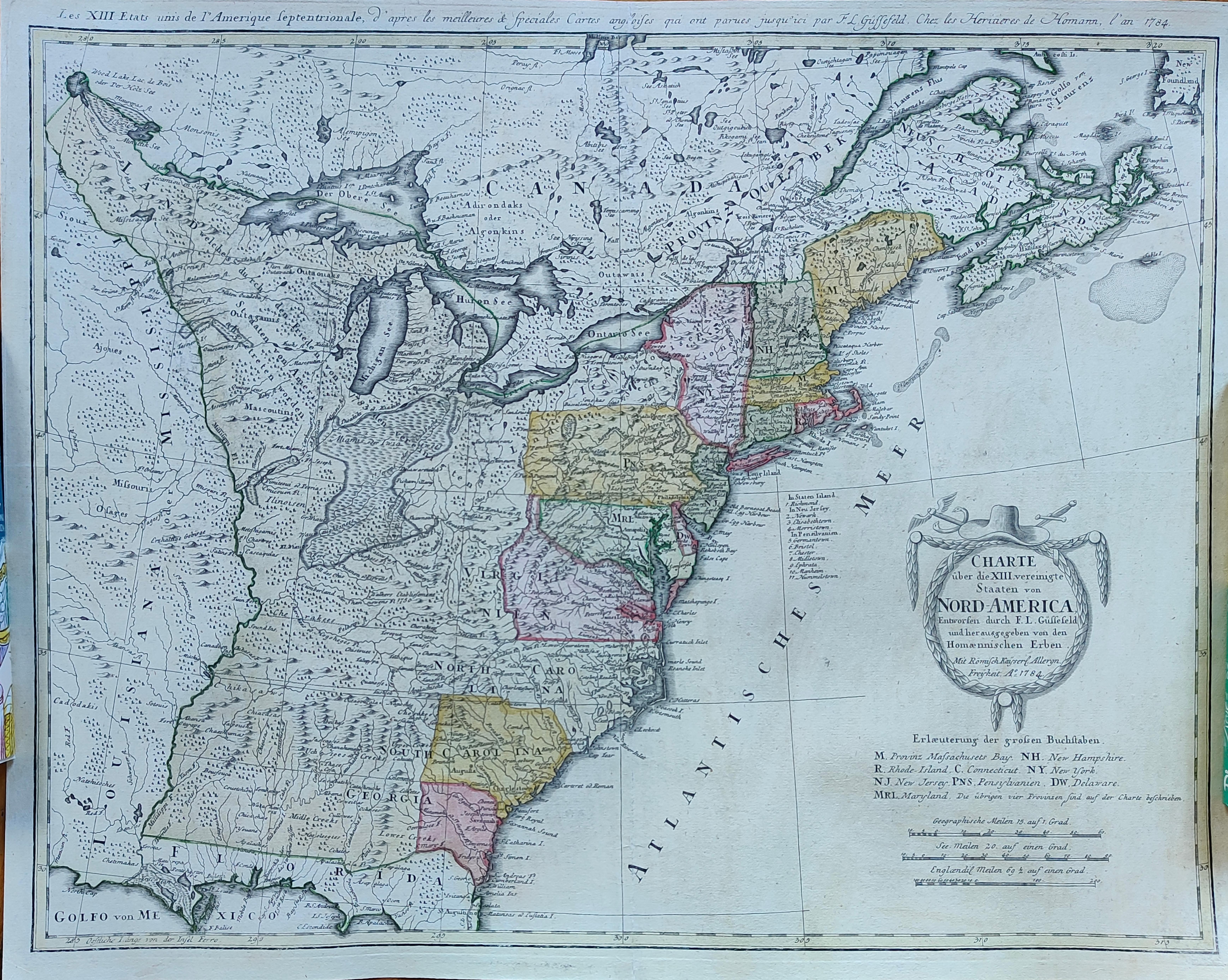
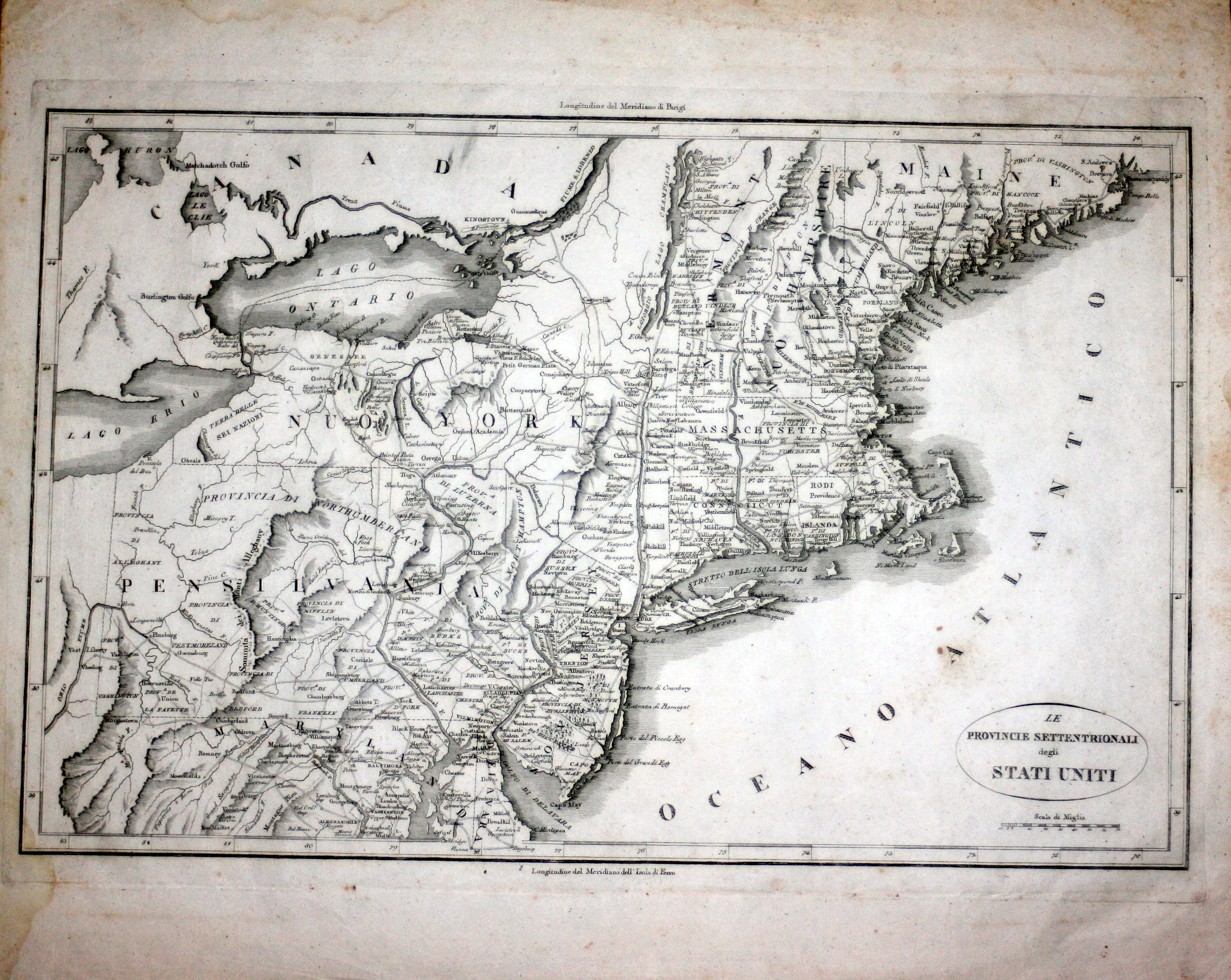
The New England colonies are named except Vermont which is still the unnamed disputed territory between New Hampshire and New York. The area covered as a whole extends from Penobscot Bay south to Chesapeake Bay and west to Lake Erie. The map illustrates provinces, towns, forts, rivers, Native American lands and relief.
Plate: cm (29.2 × 20.3) in (11.5 × 7.99) · Paper: cm (30.5 × 22.9) in (12.01 × 9.02)
Technique
Copper engraving
Note
The New England colonies are named except Vermont which is still the unnamed disputed territory between New Hampshire and New York. The area covered as a whole extends from Penobscot Bay south to Chesapeake Bay and west to Lake Erie. The map illustrates provinces, towns, forts, rivers, Native American lands and relief.
Plate: cm (29.2 × 24.1) in (11.5 × 9.49) · Paper: cm (40.6 × 26.7) in (15.98 × 10.51)
Technique
Copper engraving
Note
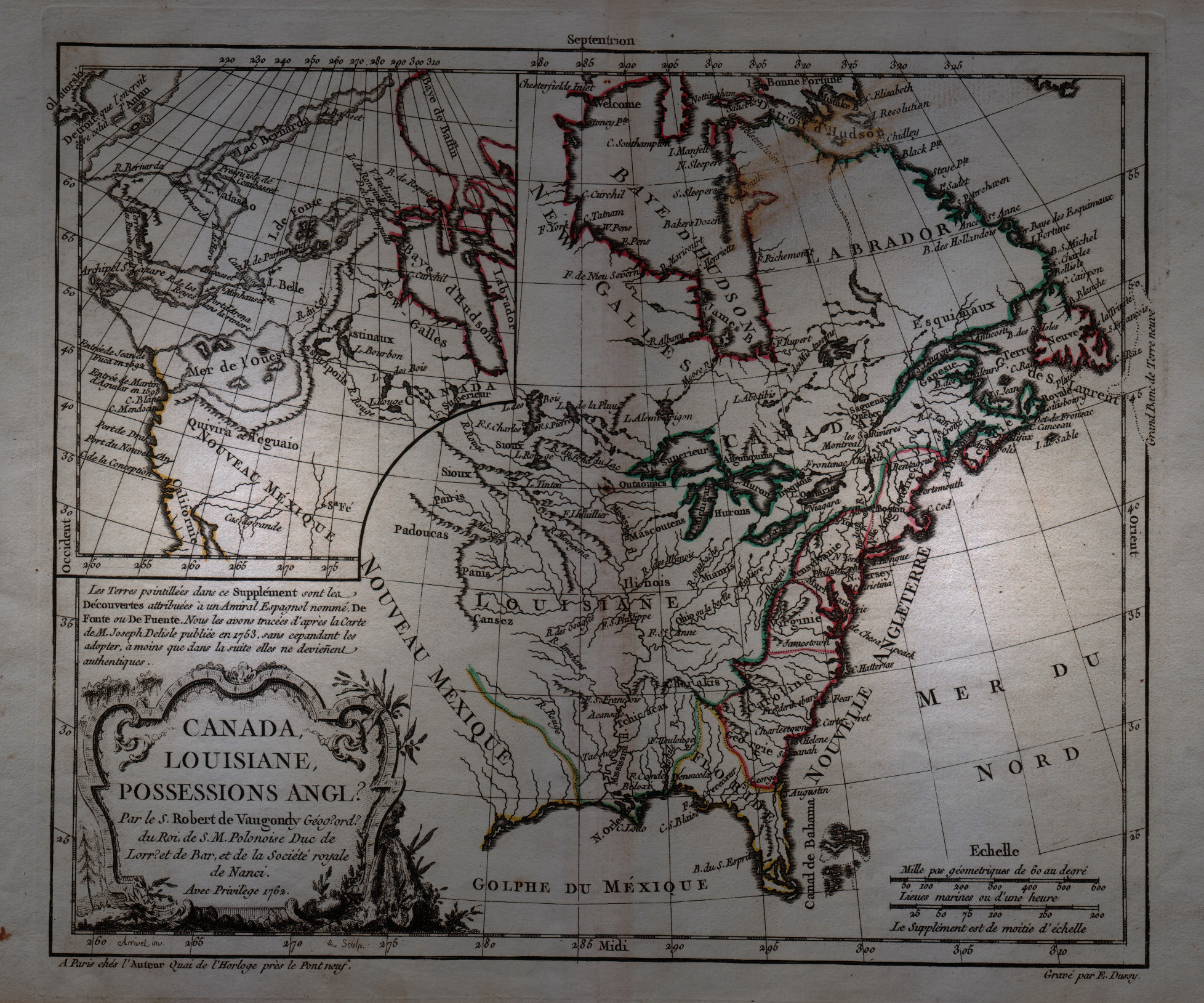
First state of this interesting map of the colonial possessions of England, France and Spain in North America. A large inset map covers the west coast and is most notable for its depiction of two remarkable cartographic misconceptions; a huge Mer de l' Ouest or Sea of the West and a Northwest Passage through a system of rivers and lakes connecting Hudson Bay with the Pacific based on the fictitious discoveries of Admiral de Font.
Plate: cm (29.2 × 20.3) in (11.5 × 7.99) · Paper: cm (36.8 × 26.7) in (14.49 × 10.51)
Technique
Copper engraving
Note
The New England colonies are named except Vermont which is still the unnamed disputed territory between New Hampshire and New York. The area covered as a whole extends from Penobscot Bay south to Chesapeake Bay and west to Lake Erie. The map illustrates provinces, towns, forts, rivers, Native American lands and relief.
Plate: cm (30.5 × 21.6) in (12.01 × 8.5) · Paper: cm (39.4 × 26.7) in (15.51 × 10.51)
Technique
Copper engraving
Note
Bellin notes all major river systems, especially the Mississippi system upon which their claims rested, and many of the French forts, including Detroit, Fort Duquesne (Pittsburgh), Fort de la Presque Isle (Erie), Sandoske, and Fort Checagou.
Plate: cm (31.8 × 21) in (12.52 × 8.27) · Paper: cm (34.3 × 22.9) in (13.5 × 9.02)
Technique
Copper engraving
Note
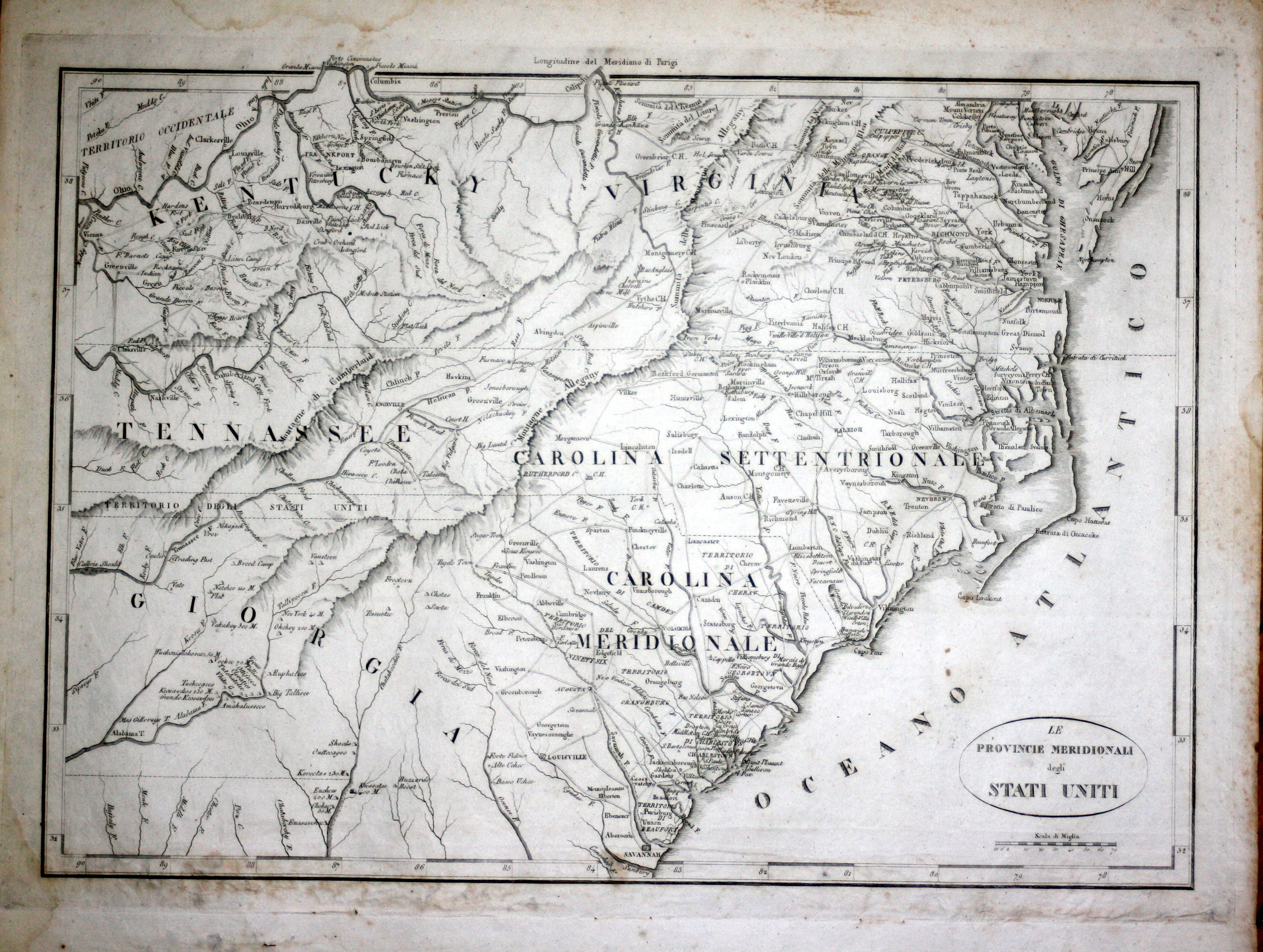
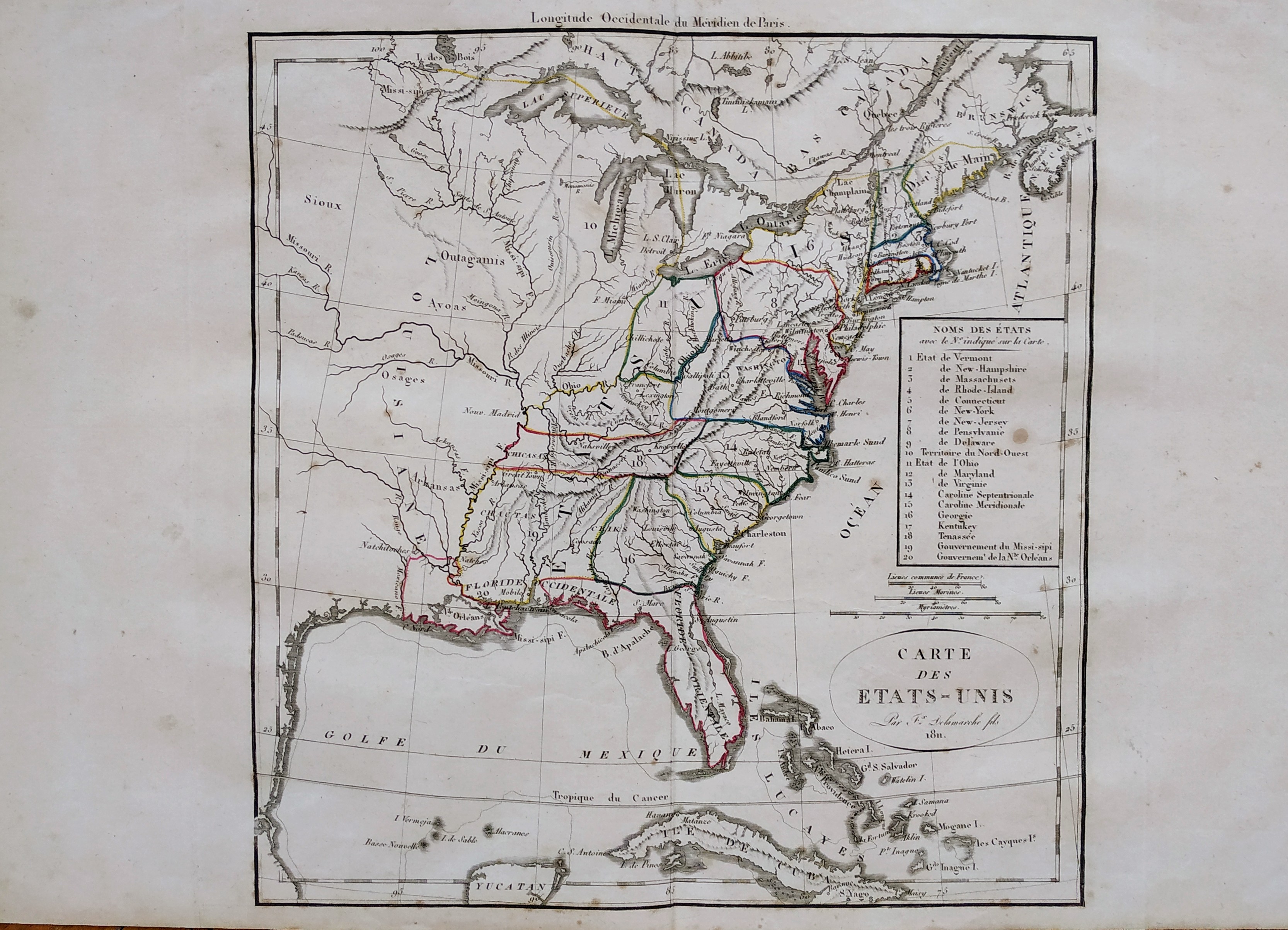
In the southeast is Florida and the eastern Atlantic coast reaching as far north as Charleston, South Carolina. In the northeast is part of Virginia. In the northwest corner is the Missouri river with several tributaries, including the Osage. The western part of the map is dominated by the Mississsippi river and it tributaries. The inset in the lower left shows the area of Jefferson City, Missouri where the Osage and Grand rivers flow into the Missouri.
Plate: cm (24.8 × 19.7) in (9.76 × 7.76) · Paper: cm (27.9 × 22.9) in (10.98 × 9.02)
Technique
Copper engraving
Note
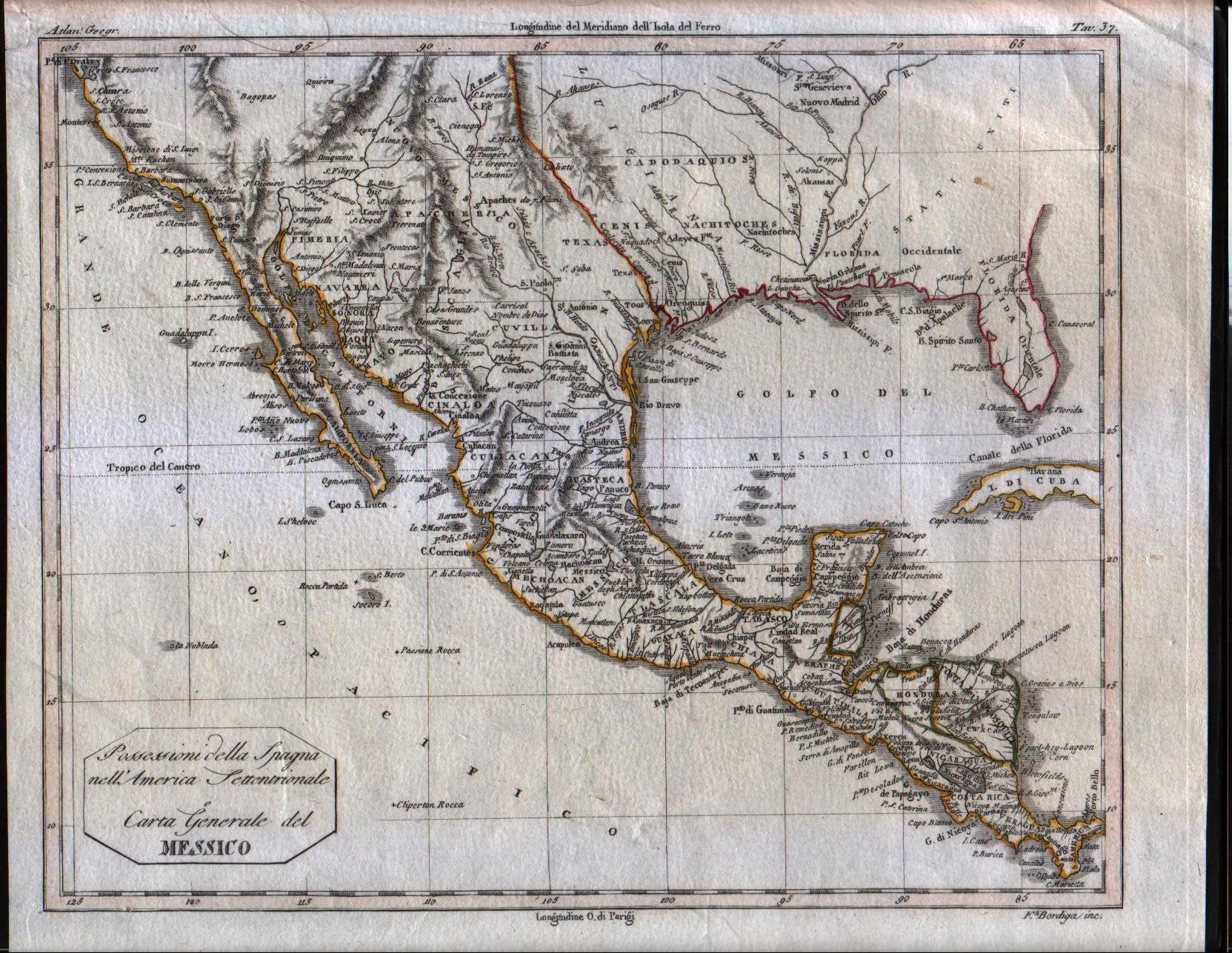
Map of the Texas, Mexico, Upper California, Louisiana Territory and Florida. The cartography is certainly pre-1810, naming East and West Florida, showing a pre-Louisiana Purchase Louisiana and very early placenames in the Southwest, most notably Pimeria, Bagiopas, and Quivira, names which would disappear from the map within a few years. Another noteworthy feature is the listing of the Missions in Upper California, which do not generally appear in atlas maps of the period. Nice detail in Texas, including the appearance of the actual name Texas, another unusual early feature. A number of forts and Indian Tribes located. An interesting early map of the region.